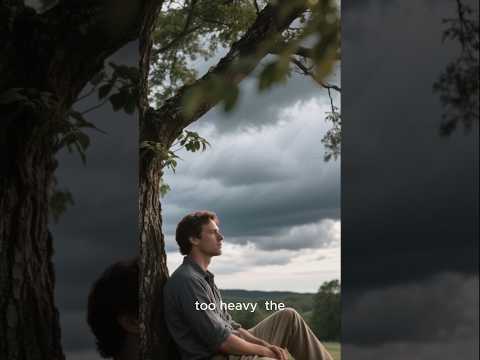
There are moments in life when the thought quietly appears: “I wish I could just disappear.”
It’s not a wish for death, nor an act of self-destruction. It’s a craving for silence — for a pause from the noise, the expectations, and the relentless weight of existence. For many, the desire to disappear is not about ending life, but about escaping from its overwhelming demands.
This urge, as strange or shameful as it may seem, is deeply human. It speaks to the quiet desperation of the soul when words fail, when exhaustion outweighs hope, and when even the simplest acts of being — smiling, talking, breathing — feel like work.
The Silent Rebellion of Disappearing
In a world obsessed with visibility, disappearing feels like freedom.
Everywhere we turn, there are reminders that we must “show up,” “be productive,” and “keep going.” To step away, to withdraw, to not participate — these are seen as signs of failure. Yet for some, disappearing becomes the only form of control left.
When life feels unpredictable and chaotic, the fantasy of escape becomes comforting. The idea of walking away from everything — responsibilities, expectations, identities — offers the illusion of peace.
Psychologically, this desire often emerges when the brain and body are in survival mode, overloaded by chronic stress or emotional pain. It’s the psyche’s way of whispering, “I can’t keep up.”
The Psychology of Wanting to Disappear
The wish to disappear often hides behind exhaustion — not just physical tiredness, but emotional depletion.
People experiencing this may appear functional on the outside but internally feel hollow, detached, or invisible. They may stop answering calls, cancel plans, or daydream about running away. These are not signs of laziness; they are symptoms of inner collapse.
From a psychological perspective, this phenomenon is linked to emotional burnout and dissociation — coping mechanisms that protect the mind from unbearable pressure. When the emotional system is flooded with stress hormones and the nervous system remains in a state of hyperarousal for too long, the brain begins to “numb out.”
Disappearing becomes a fantasy of relief — the mind’s emergency exit.
A Cry for Gentleness, Not Absence
Contrary to what society often assumes, the desire to disappear is rarely about death. It is about wanting relief — relief from the endless proving, the emotional noise, and the loneliness of pretending.
It’s a cry for gentleness, a plea to be seen without performance, loved without effort, and accepted without conditions.
Many people who feel this way have spent years in survival mode — achieving, pleasing, helping, or enduring. They have been told to “be strong” but never taught how to rest. They know how to carry others but not how to be carried.
So when the weight becomes unbearable, the fantasy of vanishing becomes their only imagined escape from constant pressure.
But disappearing doesn’t heal what’s broken — it only numbs it.
Healing begins not through absence, but through tenderness — through the courage to stay, softly.
When Escaping Feels Safer Than Living
For some, the desire to disappear comes from unresolved trauma or emotional neglect.
When the world has felt unsafe for too long, retreat becomes the mind’s way of self-protection. The person learns that being visible equals being hurt, so they shrink. They disappear inside themselves to avoid further pain.
This is not weakness — it is adaptation.
Children who grew up without emotional safety often become adults who seek disappearance as comfort. They associate visibility with danger and quietness with control.
In therapy, this often appears as emotional shutdown: an inability to feel or connect deeply, even with people who care.
The good news is that the mind’s need to disappear can be reversed. When safety, compassion, and emotional understanding return, the desire to vanish begins to fade. The individual no longer needs invisibility to feel safe — they learn to exist openly, gently, and authentically.
Softening Instead of Escaping
The opposite of disappearing is not visibility — it’s softening.
When we allow ourselves to rest, to stop performing, and to exist without justification, the need to vanish slowly dissolves.
Softening is a practice of presence — sitting with your feelings, even the painful ones, and realizing they are not your enemies. It’s allowing space for stillness without labeling it as failure.
True healing means learning how to rest without disappearing.
It’s the small things — taking a walk alone, breathing slowly, journaling your pain, saying no, letting silence exist. These quiet acts remind the nervous system that you are safe now. That you can stay without collapsing.
The Beauty of Staying
To stay doesn’t mean to endure every storm without breaking.
It means learning how to pause, how to breathe, how to seek connection instead of disappearance. It means building a life that doesn’t demand escape to feel peaceful.
The desire to disappear transforms when we finally feel seen, heard, and safe — not in the eyes of the world, but within ourselves.
We stop longing for invisibility when existing no longer feels like a threat.
Because sometimes, what we truly want isn’t to disappear — it’s to be found.
Practical Steps Toward Emotional Grounding
If you’ve been feeling this way — craving disappearance — here are some grounding steps to begin healing:
-
Name it without shame. Acknowledge your exhaustion. Naming your pain gives it less control.
-
Create small escapes, not disappearances. Take breaks, unplug, and rest without guilt.
-
Reach for quiet connection. Talk to someone safe — a therapist, a trusted friend, or a support group.
-
Honor your limits. You don’t have to be productive to be worthy of love.
-
Redefine strength. Strength is not endurance — it’s awareness, honesty, and softness with yourself.
-
Find safety in stillness. Meditation, gentle movement, and deep breathing remind your body it’s safe to exist.
-
Let yourself be human. You are not broken for feeling tired. You are healing from carrying too much.
Conclusion: The Art of Gentle Survival
Disappearing is a dream of peace — but peace is not found in absence. It’s found in presence.
The urge to escape life is not a defect of the mind; it’s a message from your inner world asking for compassion, silence, and rest.
When we stop fighting our exhaustion and start listening to it, something beautiful happens:
We begin to exist differently — not as machines trying to survive, but as souls learning to breathe again.
So, the next time your mind whispers, “I want to disappear,”
perhaps what it truly means is: “I need to rest.”
🌐 Read more at: https://linktr.ee/Psychological.net
Disclaimer: This article is for educational purposes only and does not constitute medical, psychological, or psychiatric advice. Please consult a licensed health professional for personal support.
#Psychology #MentalHealth #EmotionalHealing #Disappearing #Escapism #Anxiety #Depression #InnerPeace #Burnout #SelfCompassion #ExistentialPsychology #PsychologicalNet #Healing #Loneliness #EmotionalExhaustion #TraumaRecovery #HumanMind #SelfAwareness #Mindfulness
Comments
Post a Comment